Natives For Your Neighborhood is a labor of love and commitment. If you use this website, help us maintain and grow it with your tax-deductible donation.
General Landscape Uses:
Recommended for natural landscapes and habitat restorations. Not recommended for general landscaping.
Ecological Restoration Notes: A common element of rockland hammocks and pine rocklands; rarer in hammock on barrier islands.
Availability:
Grown by one or two native plant nurseries in South Florida.
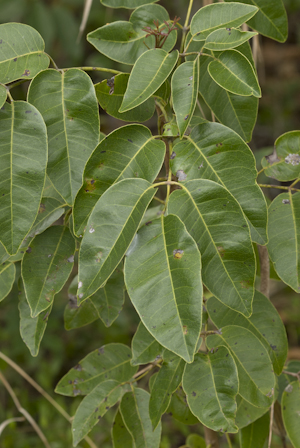
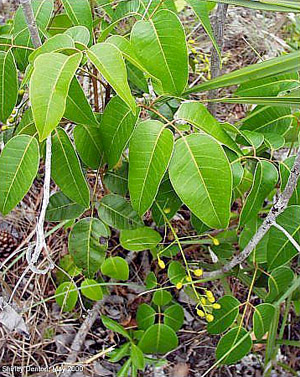
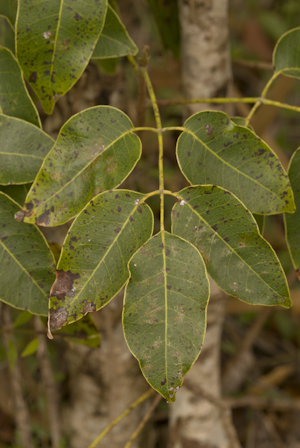
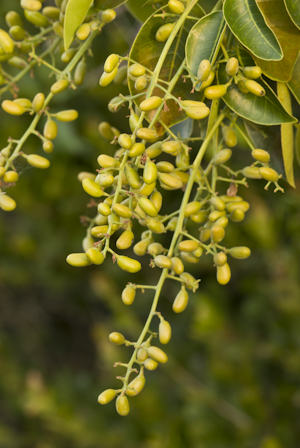
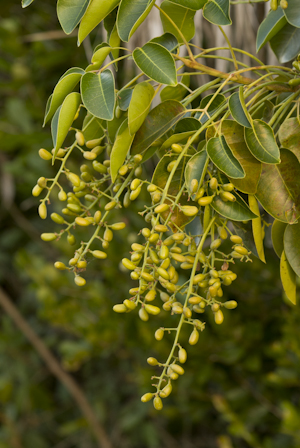
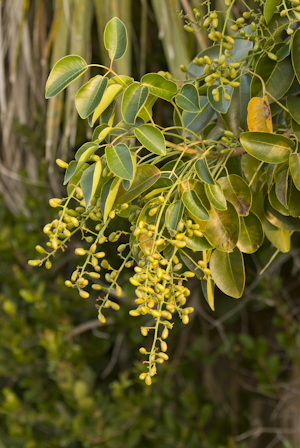
Description: Small to medium tree or large shrub with a broad crown composed of spreading , often drooping branches. Trunks often short but sometimes erect and tall, 3-24 inches in diameter. Bark reddish-brown, flaking into large plates. Leaves compound, 9-10 inches long; leaflets dark green, glossy above, blotched with black. Semi-deciduous, most or all leaves are dropped during leaf exchange in the late winter or early spring.
Dimensions: Typically 10-40 feet in height; to 63 feet in South Florida. Usually taller than broad.
Growth Rate: Moderate.
Range:
Monroe County Keys north mostly along the east coast to Martin County; Greater Antilles. For a digitized image of Elbert Little's Florida range map, visit the Exploring Florida website.
Habitats: Hammocks and hammock edges. Also an understory shrub in pine rocklands.
Soils: Moist, well-drained limestone or sandy soils, with or without humusy top layer.
Nutritional Requirements: Moderate to low; it prefers soils with organic content, but will still grow reasonably well in nutrient poor soils.
Salt Water Tolerance: Low; does not tolerate long-term flooding by salt or brackish water.
Salt Wind Tolerance: Moderate; grows near salt water, but is protected from direct salt spray by other vegetation.
Drought Tolerance: High; does not require any supplemental water once established.
Light Requirements: Full sun to light shade.
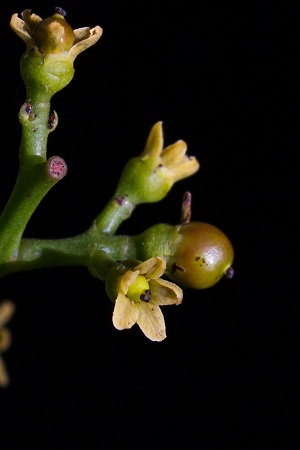
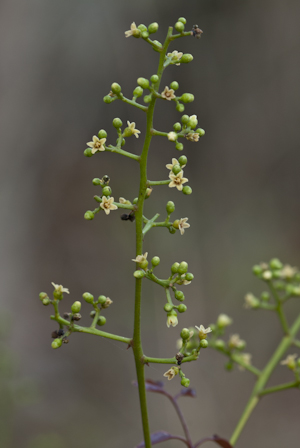
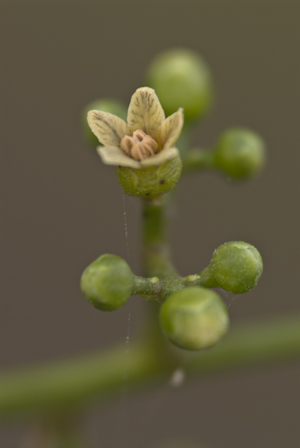
Flower Color: Greenish-yellow.
Flower Characteristics: Inconspicuous. Dioecious, with male and female flowers on separate plants.
Flowering Season: All year; peak in spring.
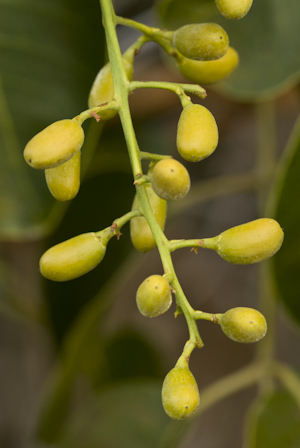
Fruit: Orange 3/4" long drupe. Fall.
Wildlife and Ecology: Provides significant food and cover for wildlife. Nectar plant for Bahamian swallowtail (Papilio andraemon), Florida white (Appias drusilla), giant swallowtail (Papilio cresphontes), julia (Dryas iulia), large orange sulphur (Phoebis agarithe), mangrove skipper (Phocides pigmalion), southern broken-dash (Wallengrenia otho) and other butterflies. White-crowned pigeons eat the fruit during nesting season.
Horticultural Notes: Can be grown from seed.
References: Hammer 2004
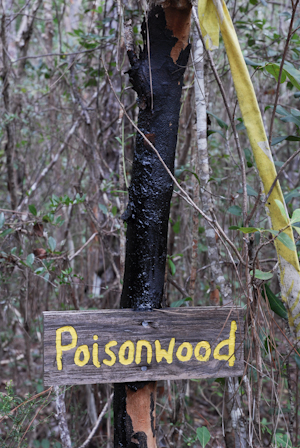
Comments: For serious enthusiasts only. The entire plant is caustic and can cause a rash similar to that caused by poison-ivy. Smoke from burning wood is irritating to the eyes and throat. See also a 2022 post on the Treasure Coast Natives blog about the toxicity and berries of Poisonwood.
Copyright by: Keith A. Bradley
Copyright by: Keith A. Bradley
Copyright by: James Johnson, 2014 In habitat, Everglades National Park, Florida










 Map of select IRC data from peninsular Florida.
 Map of ZIP codes with habitat recommendations from the Monroe County Keys north to Martin and Charlotte counties.