General Landscape Uses:
An accent tree in wet or mucky soils or along the edges of ponds and lakes. Water gardens.
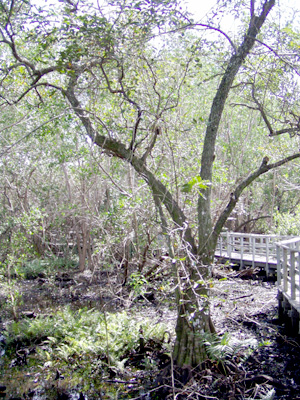
Ecological Restoration Notes: A common element in deeper water in freshwater swamps and in permanantly innundated sloughs. It also grows in the bottoms of sinkholes in rockland hammocks, but has been impacted there by drainage.
Availability:
Commonly available at native plant nurseries in central and South Florida. Available at
Indian Trails Native Nursery in Lake Worth (561-641-9488), in Naples at
Everglades Native Designs.
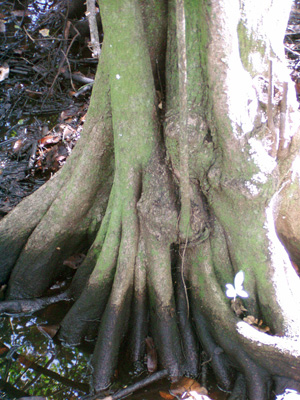
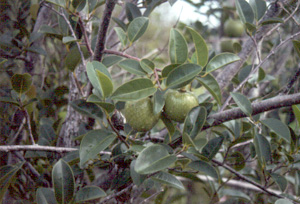
Description: Small to medium tree or shrub with a rounded crown from wide spreading branches with thick bases. Trunks short and often buttressed. Bark smooth, eventually marked by long, broad, shallow grooves, dark reddish brown. Deciduous to semi-deciduous, loosing its leaves during the winter. Leaves thick, shiny, dark green above and pale beneath, 3-7 inches long; aromatic when crushed.
Dimensions: Typically 20-40 feet in height; to 48 feet or more in South Florida. Can be as broad as tall or broader.
Growth Rate: Fast to moderate.
Range:
Monroe County Keys north to Brevard, Highlands and Manatee counties, West Indies, southern Mexico, Central America, South America and western Africa. In the Monroe County Keys, very rare and scattered from Key Largo to Key West. Along the east coast, common nearly throughout north to Martin County, then rare mostly along the coast north to Brevard County. For a digitized image of Elbert Little's Florida range map, visit the
Exploring Florida website.
 Map of select IRC data from peninsular Florida.
 Map of suggested ZIP codes from South Florida north to southern Brevard, Osceola, Polk, and Pasco counties.
Map of ZIP codes with habitat recommendations from the Monroe County Keys north to Martin and Charlotte counties.
Habitats:
Map of suggested ZIP codes from South Florida north to southern Brevard, Osceola, Polk, and Pasco counties.
Map of ZIP codes with habitat recommendations from the Monroe County Keys north to Martin and Charlotte counties.
Habitats: Swamps, wet forests, sloughs and sinkholes in rockland hammocks.
Soils: Wet to moist, poorly-drained to moderately well-drained organic soils.
Nutritional Requirements: High; requires rich organic soils for optimal growth.
Salt Water Tolerance: Moderate; tolerates brackish water or occasional inundation by salt water.
Salt Wind Tolerance: Moderate; grows near salt water, but is protected from direct salt spray by other vegetation.
Drought Tolerance: Low; requires moist to wet soils and is intolerant of long periods of drought.
Light Requirements: Full sun to light shade.
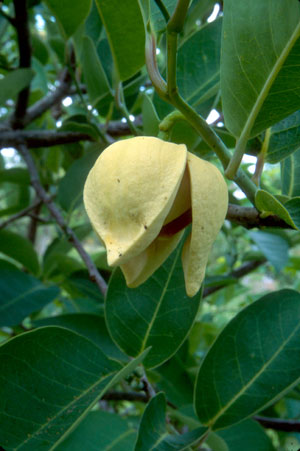
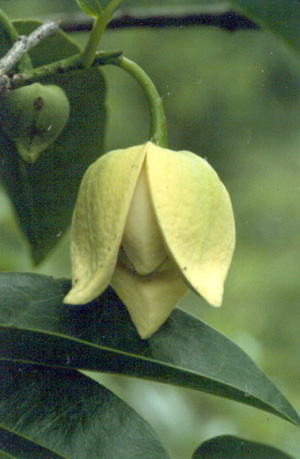
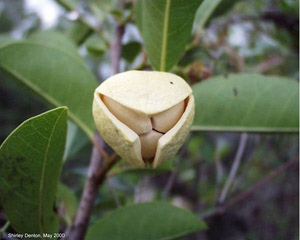
Flower Color: Yellowish marked red at outer base and inside.
Flower Characteristics: Semi-showy, 1" broad, thick and fleshy, solitary on a stout stem, drooping. Monoecious or dioecious, with male and female flowers on separate or the same plants.
Flowering Season: Spring.
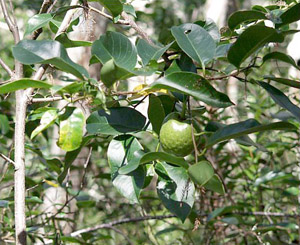
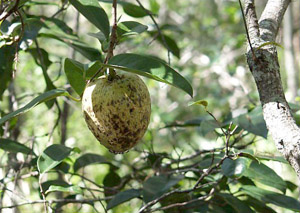
Fruit: Light green, dark brown when ripe, 3-5" long; summer-fall. Edible, but distasteful. Seeds numerous, shiny and black.
Wildlife and Ecology: Provides significant food and cover for wildlife. A major host plant for epiphytic orchids and bromeliads. Attracts beetle pollinators.
Horticultural Notes: Easily grown from seed.
References: Florida Board of Forestry 1961, Nelson 2003, Schaefer & Tanner 1997
Comments: The fruits have been used to make jelly and custard. Historically, the largest trees were reported for the shores of Biscayne Bay near the mouth of the Miami River; trees there were reported to grow to 60 feet in height. Major pond apple forests along the southern rim of Lake Okeechobee were destroyed for agriculture early in the 20th century.